What Is Supply Path Optimization and How Does It Work?
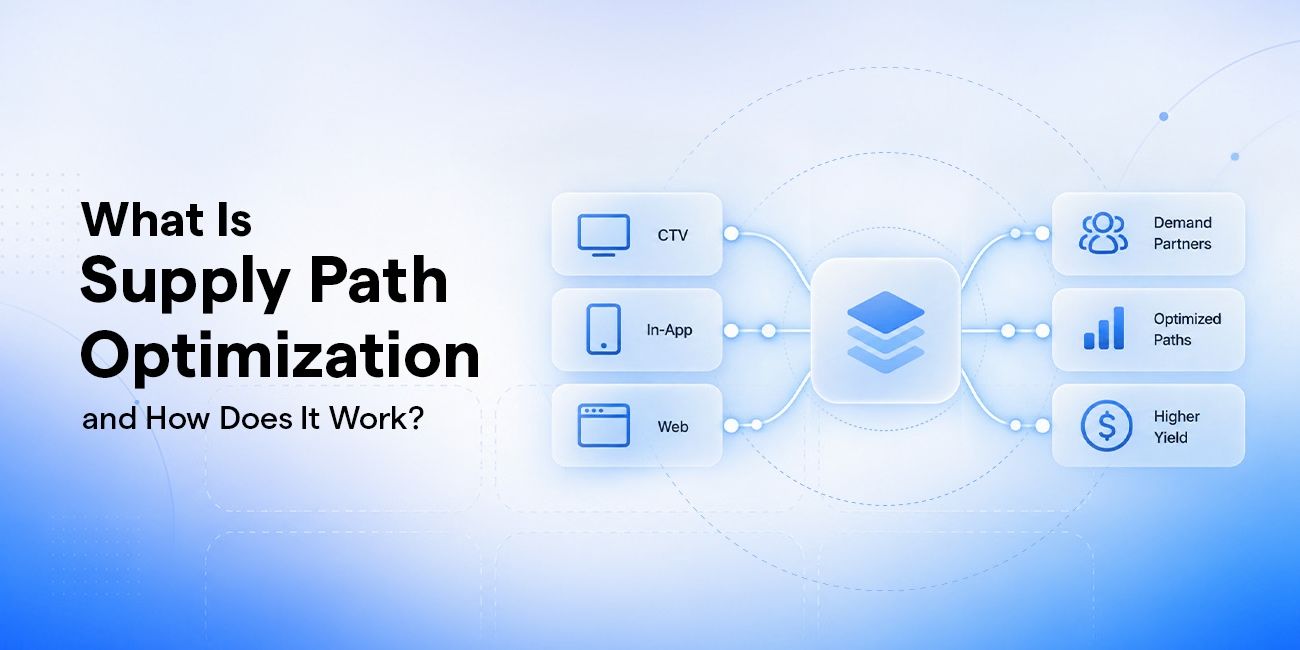
Supply path optimization, or SPO, is how advertisers and their platforms evaluate the different routes to a piece of ad inventory and choose the ones worth paying for, rather than bidding through every reseller that happens to offer the same slot. Say an advertiser wants to reach a reader on a news site. The short version of that path looks like this: advertiser, DSP, one SSP, publisher. But the same ad slot might also be reachable through a longer version: advertiser, DSP, an SSP, a reseller working with that SSP, another exchange that reseller sells through, and only then the publisher.
Both paths end at the same inventory. One just has more hands in the middle. Separately, nearly one in five dollars spent on programmatic advertising in the US goes to waste. SPO doesn’t account for all of that, but the specific problem it targets, unnecessary hands sitting in a supply path, is part of the same broader picture.
Why the programmatic supply chain got so messy
Buying an ad used to mean a publisher had inventory, an advertiser wanted it, and the two sides worked something out directly. Programmatic advertising put that process through an auction instead, which made buying and selling faster, but it also opened the door to complexity nobody fully planned for.
Header bidding is where things really changed. Instead of offering inventory to one exchange at a time, publishers could offer the same ad slot to several exchanges at once, all bidding against each other. That increased competition for publisher inventory, which publishers liked, but it also meant the same slot could now be sold through five or six different paths at once, some running through a reseller, or a reseller of a reseller, before reaching an actual publisher.
An advertiser bidding through one of those paths had no easy way to tell if a different route to the exact same inventory would have cost less or taken fewer cuts along the way.
What problem is supply path optimization actually solving
Duplicate exposure is the most mechanical of the problems. When the same ad slot gets offered through multiple exchanges at once, a DSP can end up seeing several bid requests that actually represent the same underlying impression, with no obvious way to tell they’re duplicates. That creates unnecessary auction duplication and makes it harder for the buyer to tell which route was actually the efficient one.
The messier problem sits with the resellers themselves. Some genuinely help, giving smaller publishers access to demand they couldn’t reach on their own. Others mostly sit in the middle, and additional intermediaries in a path can mean additional costs, or a smaller share of spend actually reaching the publisher, without necessarily doing anything to earn that cut. Telling the two apart is most of what SPO is actually trying to do.
Underneath both of those sits a transparency problem. When an ad passes through several resellers before reaching the final buyer, it gets harder to tell who actually owns the inventory, whether the traffic behind it is real, and where the money is going.
How Does Supply Path Optimization Work?
How a DSP decides which path to bid through
A demand-side platform doesn’t just take the first bid request it sees. When the same inventory shows up through more than one path, an SPO-aware DSP weighs signals like how many resellers are involved, what fees each path charges, and whether the connection to the publisher is direct or several steps removed, then applies its own buying rules to decide which path is actually worth bidding through.
This decision happens for every single auction, which is part of why it needs to be automated rather than manual. A DSP running millions of bid requests a day can’t have someone checking each one by hand, so the logic for comparing paths gets built directly into the bidding system itself, evaluating each opportunity in the same fraction of a second it takes to place the bid.
Why fewer hops usually means a better deal
A shorter path can reduce the number of intermediaries and the fees that come with each one, but path length by itself doesn’t determine the value or cost of a route. A two-hop path run by an unreliable exchange can still perform worse than a three-hop path run by well-vetted partners. Fewer hops also tends to mean fewer places where something can go wrong, like a bid getting lost, mispriced, or resold without anyone noticing, but hop count is a useful signal to check, not the only thing that matters.
The tools that make supply paths visible
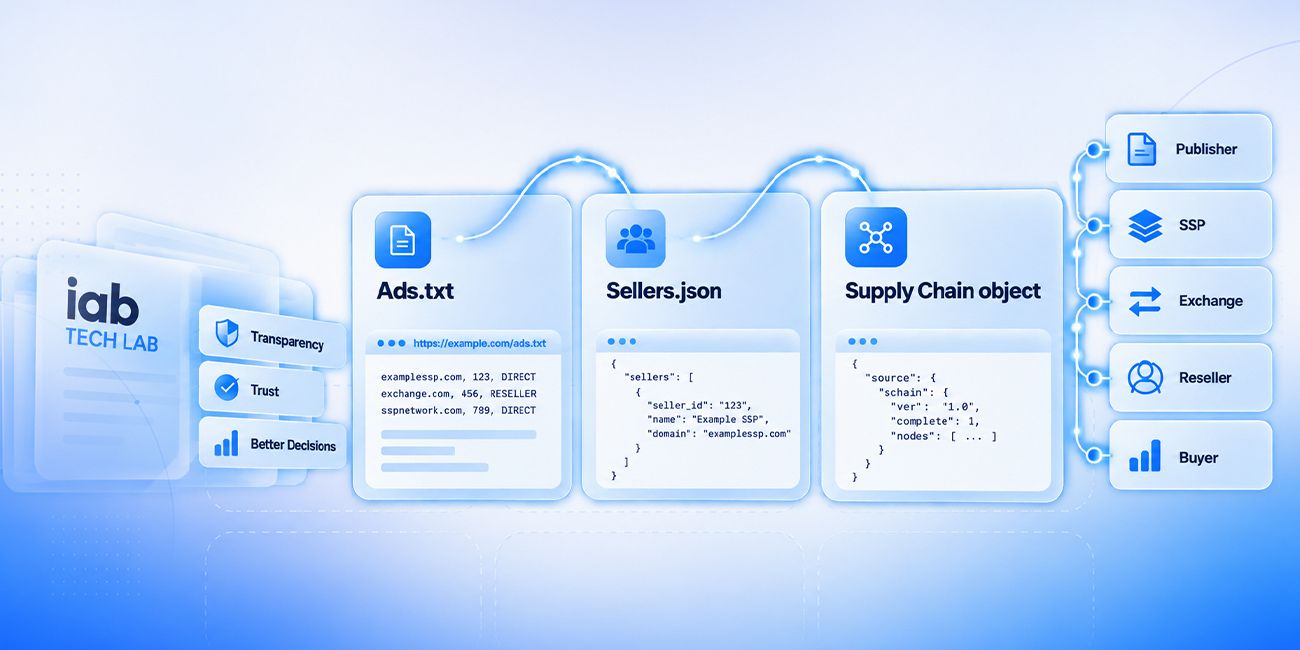
None of this works without a way to actually see the supply chain, which is where a few IAB Tech Lab standards come in.
Ads.txt
Ads.txt is a simple text file a publisher puts on their website listing exactly who is allowed to sell their ad inventory. If a seller isn’t on that list, a buyer knows something is off. Adoption was slow at first. Just 8.5 percent of the top 5,000 websites selling programmatic ads had adopted ads.txt in September 2017, a figure that passed half of those sites within about five months. It’s since become close to standard practice across the industry. App-ads.txt works the same way but is built for mobile apps and CTV, since neither has a website domain of its own to host a file on.
Sellers.json
Sellers.json works from the other direction. Where ads.txt tells buyers who a publisher has authorized, sellers.json is published by exchanges and SSPs, listing every seller account operating through that platform, including resellers.
Supply Chain object
The SupplyChain object goes further still. It’s a data field added to a bid request that declares each of the entities involved in getting that request from publisher to buyer, rather than leaving it to be pieced together from separate files. Where ads.txt and sellers.json each show one side of the relationship, the SupplyChain object gives a DSP a way to see the fuller route in one place.
None of these three fixes the supply chain on its own. A publisher can publish an ads.txt file and still work with a long list of resellers. An exchange can publish a technically accurate sellers.json file that still shows a very indirect path to the actual inventory. The value shows up when a DSP checks all three together, rather than treating any one of them as proof that a path is clean.
Helix, a Publisher Monetization Platform and Self-Serve SSP, is built around this same visibility on the supply side. Publishers can validate and manage ads.txt records to ensure only authorized sellers, exchanges, and resellers can monetize their inventory, which is the publisher-side half of the same check a DSP runs when evaluating a path. A publisher whose ads.txt records are accurate and current is presenting demand with a supply path that’s already easier to verify, rather than one a buyer has to untangle on their own.
Can SPO Reduce Auction Competition?
Cutting supply paths isn’t free of trade-offs, and this is the part most explanations of SPO skip. Removing a path that’s pure duplication, with nothing behind it but an extra fee, is a clean win. But a path that looks redundant on paper sometimes represents a real demand source, one more buyer competing for that impression. Cut it, and the auction has one less bidder in it, which can quietly soften the price a publisher gets even though the supply chain looks cleaner.
This is why treating SPO as “fewer paths, always” can backfire. The actual judgment call isn’t how many paths exist, it’s whether each one is bringing something distinct to the table, whether that’s unique demand, better pricing, or access to a publisher relationship nobody else has. A path that just duplicates another one adds nothing and should go. A path that brings a real, separate source of competition is doing its job even if it isn’t the shortest route available.
How Do Buyers Know Two Paths Are the Same Inventory?
Spotting a duplicate path is not always as obvious as it sounds, since the two bid requests won’t look identical on the surface. What buyers and their platforms actually check tends to include the publisher domain or app bundle ID, the seller ID and account type declared in ads.txt, whether that seller shows up as a direct or reseller entry in sellers.json, and whether the SupplyChain object on the request lists the same publisher further down the chain. When several of these line up, that’s a strong signal the two paths are reselling the same inventory rather than offering genuinely separate access to it.
What advertisers and publishers actually get out of it
For advertisers, evaluating shorter or more direct routes can help surface unnecessary intermediary costs that a single-path view would never show, along with a clearer picture of where impressions are really coming from. Reporting also tends to get cleaner, since there are fewer parties between the advertiser and the actual placement to introduce inconsistencies in how an impression gets counted or valued.
SPO itself is mainly a buy-side practice. Publishers don’t run it so much as feel its effects. For publishers, that mostly shows up as fewer resellers competing to sell the same inventory, which reduces the confusing situation where a buyer sees the same ad slot offered at different prices through different paths. It can also help publishers see which supply relationships buyers are actually going through, and where duplicate or unnecessary resale paths might be sitting between them and their own inventory.
How to build a supply path optimization strategy
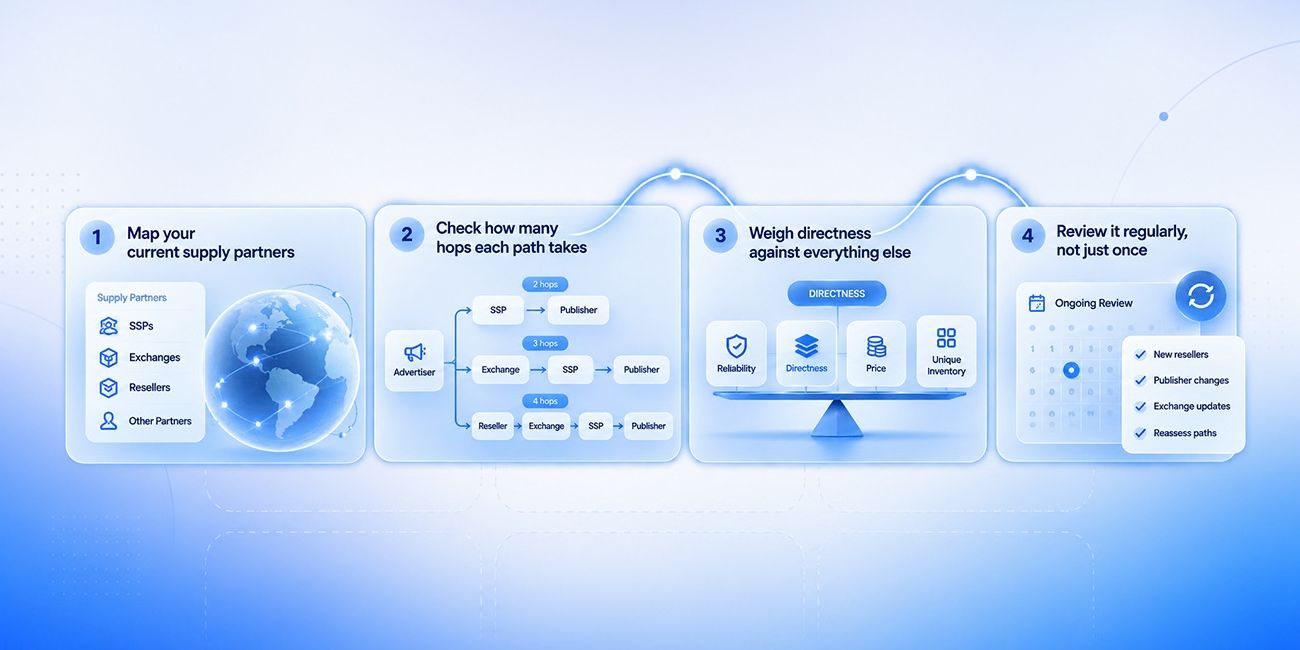
Start by mapping current supply partners
Before optimizing anything, it helps to know exactly which SSPs, exchanges, and resellers are currently involved in delivering ads. Many advertisers are surprised by how many paths are active at once once they actually look.
Check how many hops each path takes
For the inventory that matters most, look at how many parties sit between the advertiser and the publisher on each path. Some paths turn out to be far more direct than others for the exact same inventory, which is often not obvious until someone actually checks.
Weigh directness against everything else
Once the hop count is clear, that’s one input, not the final answer. A shorter path is worth leaning into when it’s also reliable and reasonably priced. A longer path is still worth keeping if it reaches inventory or demand nothing else does. The point of this step is deciding which paths earn their place, not automatically favoring whichever one has the fewest steps.
Review it regularly, not just once
Supply paths shift as SSPs add new resellers, publishers change partners, and exchanges adjust their own connections. A path that looked clean six months ago might not be clean anymore, so this is something to check periodically rather than fix once and forget about.
What people get wrong about SPO
The most common mistake is treating SPO as “just buy direct from the publisher, always.” Direct paths are often shorter, but not every reseller is dead weight. Some genuinely give smaller publishers or niche inventory access to demand they’d never reach otherwise, and cutting them out on principle can mean losing access to real audiences. The goal isn’t zero intermediaries. It’s making sure the ones still in the chain are actually adding something worth the fee they take.
The other common mistake is treating SPO as something that runs itself once it’s set up. It’s closer to ongoing maintenance than a fix. The programmatic supply chain keeps changing, and a supply path that made sense last quarter can quietly turn into a longer, more expensive one without anyone noticing unless someone keeps checking. New resellers join the chain, existing ones get bought out or shut down, and publishers switch which platforms they work with, all of which can change the shortest path to a piece of inventory without anyone actively deciding it should change.
Frequently Asked Questions
Is supply path optimization the same as buying direct from publishers?
Not exactly. Buying direct is often one outcome of SPO, but SPO is really about evaluating every available path and picking the most efficient one, which sometimes still runs through a well-run reseller rather than the publisher itself.
Does SPO stop ad fraud?
No. SPO reduces unnecessary intermediaries and improves transparency, which can make fraud easier to spot, but it isn’t a fraud prevention tool on its own.
Who is responsible for supply path optimization, the DSP or the advertiser?
It depends on the setup, but usually both play a part. DSPs build the technical logic that evaluates different paths, while advertisers and their teams still need to review which partners and paths their budget is actually running through, especially if they’re managing campaigns across more than one platform.
Does supply path optimization cost more to set up?
Not directly. It’s more about how a DSP routes existing budget than an added expense, though it does take time to map supply partners and review paths regularly.
What’s the difference between ads.txt and sellers.json?
Ads.txt is published by a publisher to declare who’s authorized to sell their inventory. Sellers.json is published by an SSP or exchange to declare every seller account operating on their platform.
Related blogs for you
Industry trends, product updates, and publisher strategies straight from the people building the future of programmatic.